
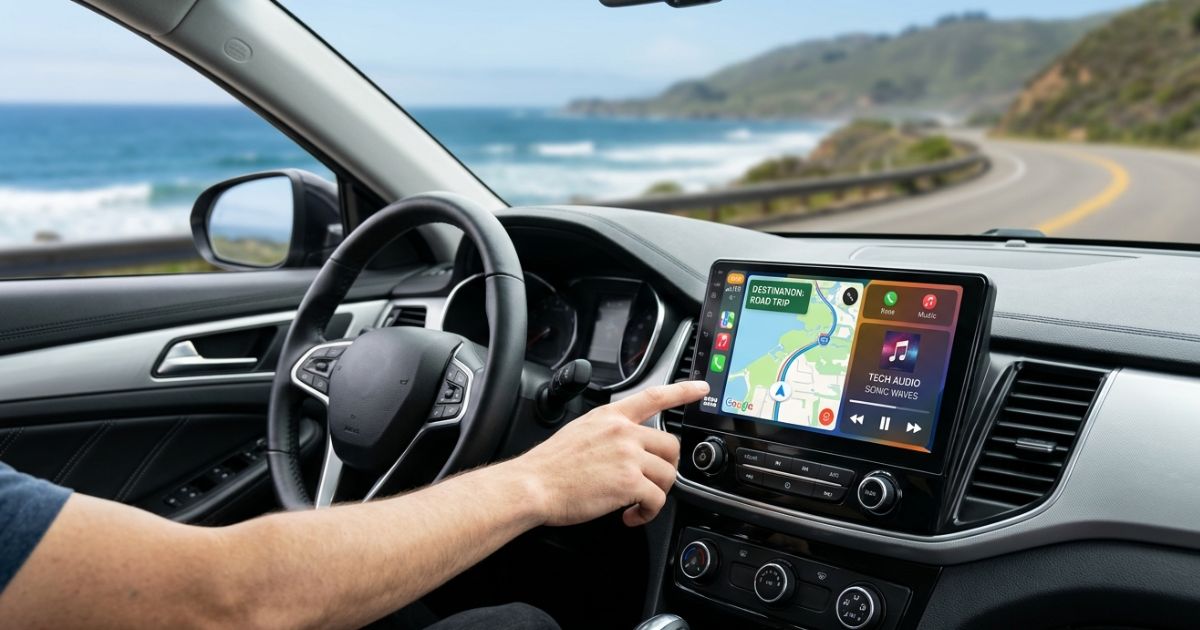
Car Stereos and Head Units: The Complete Guide
If you have ever sat in your car, turned up a song you love, and felt like something was missing, your head unit is probably the problem. The factory stereo in most vehicles is built to a budget and manufacturers are not trying to give you great sound, they are trying to check a box.
A head unit is the brain of your entire car audio system. It controls everything: what you hear, how loud it is, what sources you can connect, and how well it talks to your amplifiers and speakers. Upgrading it is the single most impactful first step in any car audio build, and it is the one piece of equipment that touches every other part of your system.
This guide covers everything you need to know before you buy: what to look for, what the specs actually mean, which features matter and which are just marketing, and how to figure out what fits your specific vehicle and budget.
What is a Head Unit?
A head unit, also called a car stereo or car receiver, is the control center of your car's audio system. It sits in your dashboard, handles all your audio sources (radio, Bluetooth, USB, Apple CarPlay, Android Auto), and sends that audio signal out to your speakers or to an external amplifier.
Most factory head units do a passable job of playing sound, but they are limited in two important ways. First, the built-in amplifier is weak, typically producing 15 to 18 watts of real usable power per channel even when the spec sheet says 50 watts peak. Second, they have very limited tuning options, so you cannot correct for the acoustics of your specific vehicle.
An aftermarket head unit fixes both of those problems. You get more output power, better digital-to-analog conversion, and far more control over your sound.
Single DIN vs Double DIN: Which One Fits Your Car?
Before you look at a single feature or spec, you need to know what size opening you have in your dashboard. There are two standard sizes:
Single DIN is 2 inches tall by 7 inches wide. It is a smaller slot, common in older vehicles and some trucks. Single DIN head units are usually face units with a smaller screen or no screen at all.
Double DIN is 4 inches tall by 7 inches wide, which is exactly two Single DIN slots stacked. This is the standard for most vehicles built after the mid-2000s and gives you room for a large touchscreen display.
Some vehicles, especially newer ones with factory infotainment systems, use non-standard dash openings. These typically require a custom dash kit or a specific brand's integration kit. Vehicles like the Toyota Tacoma, Jeep Wrangler, and Ford F-150 have dedicated aftermarket options that make the swap clean and factory-looking.
The Features That Actually Matter
Apple CarPlay and Android Auto
If your phone is an iPhone, you want Apple CarPlay. If you are on Android, you want Android Auto. Both features put your phone's navigation and music apps on the head unit screen, giving you hands-free navigation, calls, and music through apps like Spotify, Google Maps, Waze, and Apple Maps.
Wireless CarPlay and wireless Android Auto are available on newer head units and eliminate the need to plug in your phone every time you get in the car. If this matters to you, it is worth the extra cost.
Preamp Output Voltage
This is the spec most people overlook and it is one of the most important ones on the list if you are planning to run an external amplifier. Preamp outputs are the RCA connections on the back of your head unit that send a clean audio signal to an amp.
The higher the preamp voltage, the stronger and cleaner the signal going to your amp, and the less noise (like alternator whine) you will pick up along the way. Look for at least 4 volts. Premium units go up to 5 or 6 volts. Cheap units often offer only 2 volts, which can cause problems in a real system.
Built-in DSP
DSP stands for digital signal processor. Some head units have one built in, which lets you do things like time alignment (making all your speakers sound like they are coming from the same point in space), parametric EQ adjustments, and crossover control.
For a basic system, built-in DSP is a nice bonus. For a serious build with multiple amplifiers and speakers, you will likely want a dedicated external DSP unit instead. But for most people doing a one-amp, four-speaker setup, a head unit with solid built-in DSP does the job well.
Steering Wheel Control Compatibility
Most vehicles built after 2004 have steering wheel audio controls. These typically include volume up, volume down, and changing the track backwards and forwards. These do not automatically work with an aftermarket head unit. You will need a steering wheel control interface adapter, which is a small module (usually from a brand like iDatalink Maestro, Axxess Integrate, or PAC) that translates your factory controls to the new head unit.
Good installation shops include this in every build. If you are doing it yourself, do not skip this step.
Here are a few of the adapters we carry that work with most vehicles:
Axxess AXSWC Steering Wheel Control Interface
iDatalink Maestro SW Steering Wheel Control Interface
PAC SWI-CP2 Steering Wheel Control Interface
Bluetooth and Sound Quality
Bluetooth is standard on almost every head unit made in the last ten years, but not all Bluetooth implementations are equal. Look for aptX or aptX HD codec support if you care about sound quality over Bluetooth, as these codecs compress audio less than the standard SBC codec. Also look for Bluetooth multipoint if you want to connect two phones at once.
Understanding the Power Specs (And What They Actually Mean)
Every head unit has a power rating on the box. Almost all of them say something like "50 watts x 4 channels." This number is almost always peak power and means very little in real use.
The number that matters is RMS power, which is the continuous, usable power the unit actually delivers. A typical aftermarket head unit produces around 18 to 22 watts RMS per channel. That is enough to run a decent set of door speakers without an external amp, but not enough to push a subwoofer or high-end component speakers to their potential.
The CEA-2006 standard is the honest rating system. If a head unit is CEA-2006 certified, the power numbers on the box are real. If it is not, treat the numbers with skepticism.
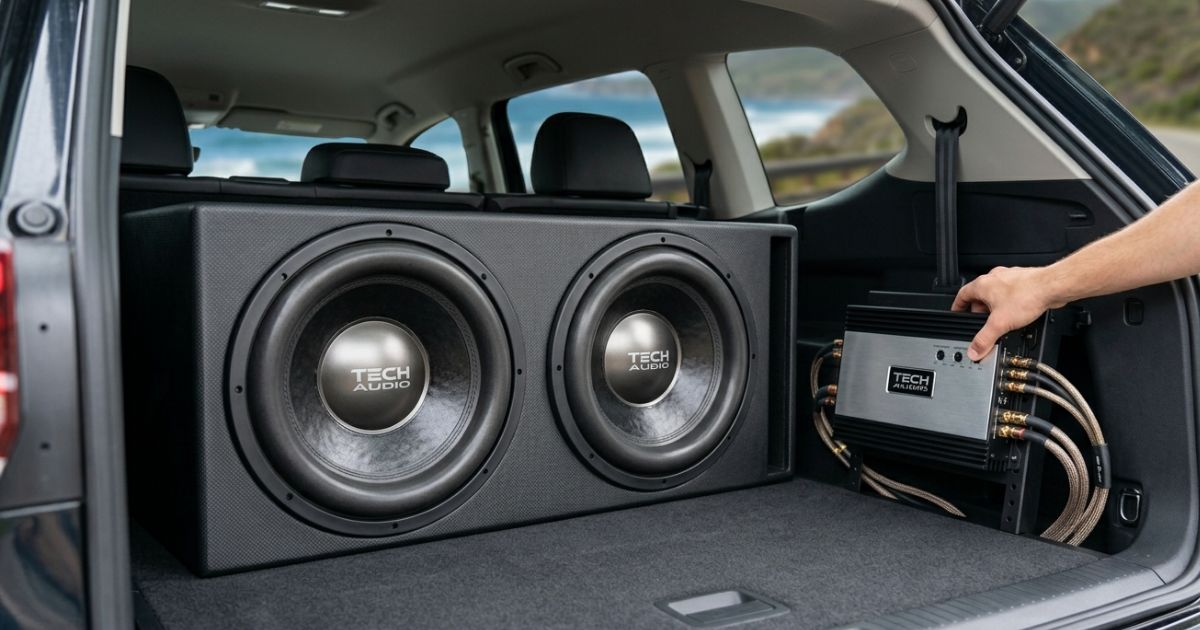
For anything beyond a basic door speaker setup, plan on adding a separate amplifier. Your head unit's job in a full system is to be a clean source and a strong signal sender, not to do the heavy lifting on power.
Head Units by Budget
Under $200: The Honest Upgrade
In this range you will find solid units from Kenwood, Pioneer, JVC, Sony, and Jensen that include Apple CarPlay, Android Auto, Bluetooth, and a clean touchscreen interface. The preamp outputs are usually around 2 to 4 volts and the DSP is basic, but this tier does exactly what it promises. It is a meaningful upgrade over any factory unit and it will make your daily driving noticeably better.
What you give up at this price point is build quality on the touchscreen (they can feel plasticky), wireless CarPlay support, and premium audio processing. For most people who want a clean, modern interface and better Bluetooth, this range is the sweet spot.
A few solid options in this range that our team recommends:
Kenwood DMX129BT
Sony MEX-N5300BT
Pioneer DMH-470EX
Browse our full selection of head units under $200
$200 to $500: Where Things Get Good
This is where Alpine and Kenwood's better lines live, along with some of Pioneer's flagship DMH units. You get wireless CarPlay and Android Auto in most units, higher preamp voltages (4 to 5 volts), better touchscreen responsiveness, and more robust DSP tuning options.
If you are also planning to run an external amp, spend your budget here rather than on the cheapest unit. A clean signal out of a quality head unit makes a real difference in how good your amp sounds downstream.
Some of the units we see perform best in real builds:
View our complete lineup of mid-range head units
$500 and Up: The Full Build Territory
At this level you are looking at units from Alpine's Halo and iLX lines, Pioneer's top-tier AVIC navigation units, and head units with built-in DSP processors that rival standalone units. Some of these integrate directly with iDatalink Maestro for deep vehicle integration, meaning they can display factory vehicle data like battery voltage, door ajar warnings, and TPMS on the head unit's screen.
These are for builders who want everything in one place and are willing to pay for the convenience of not needing a separate DSP box.
Here are the units we reach for most often at the top of the range:
Kenwood DMX1058XR
Browse our full selection of premium head units
The Brands Worth Knowing
Kenwood makes some of the most well-rounded head units on the market at every price point. Their Excelon series is a strong performer in the mid-range. Consistent build quality, solid preamp outputs, and good DSP options make them a reliable choice.
Alpine is the brand our install team reaches for most often in builds that prioritize sound quality. Their iLX and Halo series have excellent audio processing and clean preamp outputs. The X-series units with built-in DSP are a legitimate alternative to buying a separate processor.
Pioneer has the widest range of any brand in this space. Their entry-level units are some of the best value in the sub-$200 range. Their flagship AVIC navigation units are solid, though their touchscreens have historically lagged behind Alpine in responsiveness.
Sony often gets overlooked but makes excellent value units with strong CarPlay integration and clean interfaces. Their XAV series is worth a look if you are buying in the entry-to-mid range.
What About Factory Infotainment Systems?
Some vehicles come with large factory touchscreens and integrated systems (like Ford SYNC, Toyota Entune, or GM Intellilink) that are difficult or impossible to replace without losing factory features like backup cameras, factory amp control, or HVAC integration.
In these cases, you have two good options. The first is to use an interface like iDatalink Maestro to integrate an aftermarket head unit while keeping the factory systems working. The second is to leave the head unit in place and upgrade everything downstream: add an amplifier, upgrade the speakers, and use a DSP processor to improve the sound without touching the head unit at all.
Installation: What You Need to Know Before You Start
Installing a head unit is one of the more approachable DIY car audio projects. The basic process involves pulling the old unit, connecting the wiring harness adapter, plugging in your new unit, and testing before you reassemble the dash.
What trips people up is the stuff they did not plan for: needing a dash kit for their specific vehicle, the steering wheel control adapter, a backup camera wiring adapter if they want to keep their OEM camera, and sometimes a CANBUS interface if their vehicle uses a data network to control the factory audio.
The tools you need are a set of trim removal tools (plastic, not metal), a basic wiring kit or harness adapter*, dash kit, and about two to three hours of patience. If you are not comfortable with wiring, a professional install is usually $75 to $150 (depending on your vehicle and geographical location) and saves you a lot of headache.
*Note: Every vehicle is different and wiring harness prices vary based on the year, make, model, and trim of your vehicle.
Frequently Asked Questions
Will an aftermarket head unit void my car warranty? In most cases, no. U.S. federal law (the Magnuson-Moss Warranty Act) prevents manufacturers from voiding your warranty simply because you installed an aftermarket part, unless they can prove the part caused the issue. A professional installation rarely creates any problems.
Do I need an amp if I upgrade my head unit? Not necessarily for a basic upgrade. A new head unit with quality speakers can sound significantly better than your factory setup without any amplification. But if you want serious volume, deep bass, or component speakers pushed to their potential, an amp is the next step.
What is the difference between a receiver and an amplifier? A receiver (head unit) is the source and control center. An amplifier takes the signal from the receiver and multiplies the power to drive speakers and subwoofers. They do different jobs. Some head units have a basic amp built in, but for real performance they are separate components. Depending on your setup, you would want a separate amplifier for the speakers and another one for your subwoofers, or alternatively, have them built into one with a 5-channel amp.
Can I keep my factory backup camera with a new head unit? Usually yes, with the right adapter. Most quality head units have a camera input, and adapter cables exist for most factory camera connections. Your installer will know what you need for your specific vehicle. If you are DIYing it, you can call or email SD Car Stereo to help find the right adapter for your vehicle.
What to Buy First
If you are starting a build from scratch, the head unit comes first. Everything else in the system takes its cues from here: the signal quality, the DSP tuning, the source quality. Get this right and everything downstream benefits.
If you are on a tight budget and need to prioritize, a mid-range head unit ($200 to $350) with solid preamp outputs and Apple CarPlay or Android Auto, paired with upgraded door speakers, will transform how your car sounds without spending a fortune.
If you are building a serious system with a subwoofer and amplifier, spend more on the head unit. You will get cleaner signal, better tuning control, and you will not be replacing it when your system grows.
Shop Car Stereos at San Diego Car Stereo
We carry Kenwood, Alpine, Pioneer, Sony, and more. Every unit we sell is one our install team has worked with in real builds. If you have questions about what fits your vehicle or how to plan your system, reach out. We have had our hands in more dashboards than we can count, and we are happy to point you in the right direction.

Leave a comment
All comments are moderated before being published.
This site is protected by hCaptcha and the hCaptcha Privacy Policy and Terms of Service apply.