
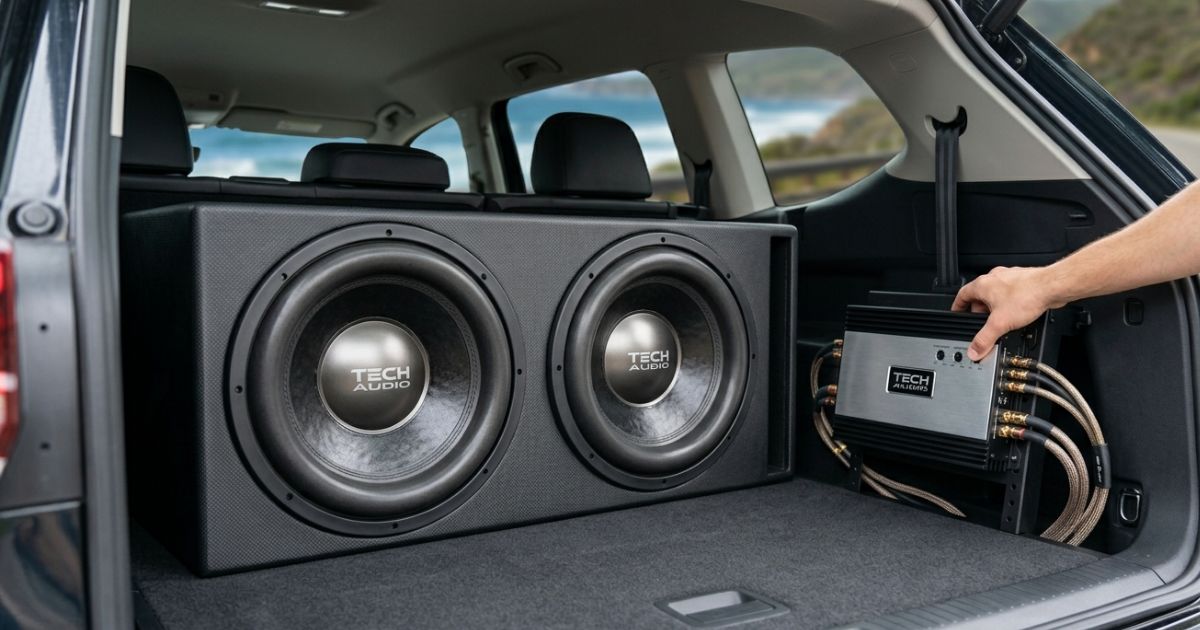
Subwoofers: The Complete Buying Guide
If you have ever heard a system that made you feel the music in your chest, that was the subwoofer doing its job. A subwoofer handles everything your door speakers cannot: the low end, the weight, the impact that makes a song feel the way it should. Without one, your system is playing with half the sound spectrum missing.
This guide covers everything you need to know before buying: what size to get, how much power you actually need, which enclosure type is right for your goals, and how to make sure your subwoofer and amplifier work together the way they are supposed to.
What Does a Subwoofer Actually Do?
A subwoofer is a dedicated speaker built specifically to reproduce low frequency audio, typically between 20 and 200 Hz. Your door speakers and tweeters are designed to handle midrange and high frequencies. They are physically not built to move enough air to produce real bass. A subwoofer is built for exactly that job and nothing else.
When you add a subwoofer to a system, you are not just adding bass. You are completing the full frequency range that the music was recorded with. Kick drums hit the way the producer intended, bass lines have body and music that felt flat suddenly has dimension.
What Size Subwoofer Do I Need?
Subwoofers come in several standard sizes. The most common are 8 inch, 10 inch, 12 inch, and 15 inch. Size affects two things: how low the sub can reach and how much air it can move.
An 8 inch subwoofer is compact and works well in tight spaces where a larger sub simply will not fit. It will give you noticeable bass improvement over no sub at all but it has limits in both output and low frequency extension.
A 10 inch subwoofer is a strong middle ground. It hits hard and responds quickly, which makes it a great choice for people who want tight, punchy bass without taking up a lot of trunk space. It is one of the most popular sizes for daily drivers.
A 12 inch subwoofer is the most common size for a reason. It balances deep extension, output capability, and enclosure size in a way that works for most vehicles and most music. If you are not sure what size to get, a quality 12 inch sub is almost always the right answer.
A 15 inch subwoofer moves a serious amount of air and can reach deeper frequencies than smaller drivers, but it requires a larger enclosure and more power to do its job properly. It is best suited for trucks, SUVs, and builds where maximum output is the goal.
What size subwoofer do I need? Full guide
Sealed vs Ported Enclosure: The Most Important Decision You Will Make
The enclosure your subwoofer lives in shapes its entire character. Two identical subwoofers in different enclosures will sound completely different. This is not a minor detail, it is one of the most important choices in any bass setup.
A sealed enclosure is an airtight box. The air inside acts as a cushion, giving the subwoofer tight, accurate, controlled bass. Sealed enclosures are more forgiving of subwoofer placement and tend to be smaller in size. If you listen to rock, hip hop with fast bass lines, or any music where accuracy matters more than raw loudness, a sealed box is usually the right call.
A ported enclosure has one or more tuned openings that allow air to move in and out. This makes the subwoofer louder and more efficient at a specific frequency range, but the bass character is different: bigger, roomier, and more dramatic. If you want maximum output and you primarily listen to genres where deep bass is the focus, a ported enclosure delivers more of that.
The right choice depends on your vehicle, your music taste, and how much trunk space you are willing to give up. Ported enclosures are almost always larger than sealed enclosures tuned for the same subwoofer.
Ported vs sealed enclosure: which is right for you?
Single Voice Coil vs Dual Voice Coil
When you are shopping for subwoofers you will see SVC and DVC listed in the specs. This refers to how many voice coils the subwoofer has, and it affects how you wire it to your amplifier.
A single voice coil subwoofer has one set of terminals and one impedance option. It is simpler to wire and works well in most basic setups.
A dual voice coil subwoofer has two independent coils that can be wired in series or parallel. This gives you flexibility in choosing your final impedance, which matters when you are trying to get the most power out of a specific amplifier. DVC subwoofers are more common in higher performance builds because of that flexibility.
If you are building your first system and not running a high-powered amplifier, a single voice coil is perfectly fine. If you are building around a specific amp and need to hit a target impedance to maximize power output, a dual voice coil gives you more options.
Single vs dual voice coil: full explanation
How Much Power Does a Subwoofer Need?
This is one of the most misunderstood topics in car audio. Most people assume more power is always better. The reality is that the right amount of power is better, and that number is different for every subwoofer.
Every subwoofer has an RMS power rating, which is the continuous power it is designed to handle. You want your amplifier to match or come reasonably close to that RMS rating. Running significantly too little power causes distortion, which is actually more damaging to a subwoofer than running slightly too much clean power. Running way too much power damages the voice coil.
The target zone is an amplifier that puts out between 75 and 150 percent of the subwoofer's RMS rating at the impedance you are running. So if your subwoofer is rated for 500 watts RMS, an amp that delivers 500 to 750 watts at your load is ideal.
How to match amp power to your subwoofer
RMS power vs peak power: what actually matters
What Do the Specs Actually Mean?
Shopping for subwoofers means dealing with a lot of numbers. Here is what the important ones actually tell you:
RMS power handling is the continuous power the subwoofer can take. This is the number that matters for matching with an amplifier. Ignore peak power ratings entirely.
Sensitivity tells you how loud the subwoofer will be given a specific amount of power. A higher sensitivity rating means more output for the same wattage. If you are working with a modest amplifier, a higher sensitivity subwoofer helps you get more out of what you have.
Xmax is the maximum linear excursion of the cone, measured in millimeters. A higher Xmax means the subwoofer can move more air cleanly before it starts to distort. Subwoofers built for loud, low bass need high Xmax numbers to do that without breaking up. That said, if you are just getting started this is not something you need to stress over. Xmax becomes a bigger factor when you are building out a more serious system and really dialing things in.
Frequency response tells you the range of frequencies the subwoofer can reproduce. A lower number on the bottom end means deeper bass. Most quality subwoofers will go down to 20 to 25 Hz, which covers everything in recorded music.
What is RMS power?
What is Xmax?
Subwoofers by Budget
Under $200: Real Bass Without Breaking the Bank
In this range you will find reliable subwoofers from Kicker, Rockford Fosgate, and Memphis Audio that will genuinely transform your system over no sub at all. Expect solid build quality, decent power handling, and good performance in a sealed enclosure. The limitations at this price point are in the materials: lighter cones, smaller magnets, and less Xmax than higher end drivers. But for someone building their first system or upgrading a daily driver on a budget, this tier delivers exactly what it promises.
Here are some of the units we recommend most often to customers in this range:
Browse our full selection of subwoofers under $200
$200 to $500: Where Performance Gets Serious
This is where the meaningful jump in build quality happens. Subwoofers in this range from JL Audio, Rockford Fosgate's R and P series, and Kicker's CompVX line feature better cone materials, larger motor structures, higher Xmax, and power handling that can support a real amplifier. If you are building a system you want to be proud of and plan to keep for a while, this is the tier worth spending into.
These are some of our favorite subwoofers at this price point:
See everything we carry in the $200 to $500 range
$500 and Up: Built for People Who Take Bass Seriously
At this level you are looking at subwoofers built with premium materials throughout: high-grade aluminum cones, massive motor assemblies, extreme Xmax, and power handling that starts at 1,000 watts RMS and goes up from there. JL Audio's W6 and W7 series, Rockford Fosgate's T series, and Memphis Audio top lines live here. These are not for casual listeners. They are for people who want to build something that performs at the highest level.
Here are the subwoofers we reach for most often at the top of the range:
View our complete lineup of premium subwoofers
The Brands Worth Knowing
JL Audio is the benchmark in this category. Their W3, W6, and W7 series represent three tiers of performance and are some of the most well-engineered subwoofers on the market. If you want the best build quality and are willing to pay for it, JL Audio is the answer.
Rockford Fosgate makes some of the most popular subwoofers in car audio for a reason. Their P, R, and T series give you clear upgrade paths from entry level to high performance, and they punch above their price point at every tier.
Kicker has built a reputation around value. Their CompC, CompR, and CompVX lines cover the full price spectrum and are reliable performers, especially in ported enclosures where they tend to shine.
Memphis Audio has been building car audio equipment since 1965 and that history shows in how their products are made. Consistently well built and fairly priced, they are a brand that experienced installers have trusted for decades. Their Street Reference and Power Reference lines cover everything from everyday drivers to serious builds, and their subwoofers have a strong reputation for taking power well and lasting. A solid choice if you want proven performance without paying top tier prices.
JL Audio brand hub
Rockford Fosgate brand hub
Kicker brand hub
JL Audio W0 vs W3 vs W6 vs W7: full lineup explained
Rockford Fosgate P vs R vs T series: what is the difference?
Do I Need a Box or Can I Buy One Pre-Built?
When it comes to enclosures you have three paths to choose from.
The first is a generic enclosure, which is a standard sealed or ported box that is not built for any specific subwoofer. These are widely available, affordable, and work perfectly fine for most everyday setups. They are not optimized for your exact driver but for the majority of people putting together their first system, a quality generic box gets the job done without any of the complexity.
The second option is a loaded enclosure, which is a pre-built box that comes with a matched subwoofer already installed inside. The enclosure is designed around that specific driver so the guesswork is already done for you. For most daily drivers who want great bass without having to think too hard about specs, a loaded enclosure is an excellent option and often the best value in the category.
The third option is a custom enclosure built to spec. This means having a box designed specifically around your subwoofer's parameters and your vehicle's available space. It takes more time and costs more money but it is the best way to get the absolute most out of any subwoofer. This is what our install team does for serious custom builds.
If you are just getting started, do not feel like you need to go the custom route right away. A generic or loaded enclosure will get you great results and you can always upgrade later as your system grows.
Best loaded subwoofer enclosures
Shallow Mount Subwoofers: Big Bass Without the Big Box
One of the biggest misconceptions about adding a subwoofer is that it has to take over your entire trunk. For a lot of vehicles and a lot of lifestyles that is simply not true, and shallow mount subwoofers are the reason why.
A shallow mount subwoofer is built with a compressed motor structure that allows it to fit in spaces a traditional subwoofer never could. The cone depth is significantly reduced compared to a standard driver, which means you can install real bass in places that would otherwise be impossible.
There are a few ways people use shallow mount subwoofers depending on their vehicle and how much space they want to give up:
Under the front seat is one of the most popular options for people who want bass without sacrificing any cargo or passenger space. A compact powered unit like the Pioneer PWE-S8 fits cleanly under most driver or passenger seats and runs off your head unit signal without needing a separate amplifier. It is one of the easiest upgrades you can do and the results are surprisingly strong for the size.
Under the rear seat is another common install, especially in trucks and SUVs where the seat bottom has usable space beneath it. A shallow mount subwoofer in a custom or vehicle-specific enclosure can sit completely out of sight while still delivering meaningful bass. Your back seat stays fully functional and your passengers have no idea there is a subwoofer under them.
In the trunk with a slim enclosure is the option for people who want more output than an under-seat setup can provide but still want to preserve most of their cargo space. A shallow mount subwoofer in a low-profile ported or sealed enclosure takes up a fraction of the space a traditional setup would while still hitting hard enough to satisfy most daily drivers.
JL Audio takes this concept even further with their Stealthbox line, which are vehicle-specific enclosures engineered to fit exactly into a particular make, model, and year without any modification. They are designed to use space that would otherwise go completely unused, like the area behind a rear seat panel or inside a factory cubby, and they look completely factory when installed. If JL Audio makes a Stealthbox for your vehicle it is one of the cleanest ways to add a real subwoofer without giving anything up.
Shallow mount subwoofers are not going to compete with a large ported box and a powerful amplifier in terms of raw output, but that is not the point. The point is getting real, meaningful bass improvement in a vehicle or lifestyle where a traditional setup is not practical. For daily drivers, families, truck owners who need their bed and back seat, and anyone who values a clean invisible install, shallow mount subwoofers are absolutely worth considering.
Shallow mount subwoofers: full guide
Best loaded subwoofer enclosures
What Else Do I Need?
A subwoofer on its own does nothing. Here is what you need to complete the setup:
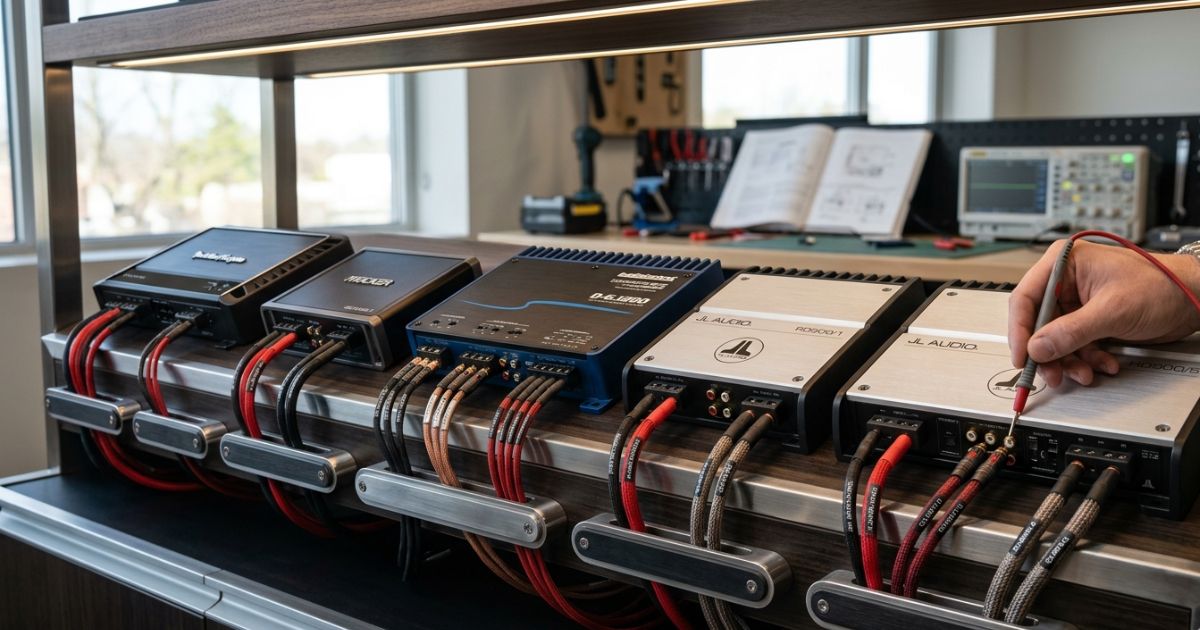
An amplifier to power it. Your head unit does not have enough power to drive a subwoofer properly. You need a dedicated mono amplifier matched to your subwoofer's RMS rating.
An enclosure. Whether that is a generic sealed or ported box, a loaded enclosure with the subwoofer already installed, or a custom box built to your subwoofer's exact specs, your sub needs a proper home to perform the way it was designed to. Any of the three options work depending on your budget and goals.
Wiring. An amp wiring kit with the right gauge power wire, ground wire, and RCA cables to connect everything cleanly.
Best mono amplifiers for subwoofers
Car amplifiers: the complete guide
How to install a car amplifier
Frequently Asked Questions
How do I know if my subwoofer is wired correctly? The easiest way is to check your final impedance against what your amplifier is stable at. Most mono amplifiers are stable at 2 ohms or 1 ohm. Wire your subwoofer to hit one of those loads and you will get maximum power from your amp without pushing it into instability.
Can I run a subwoofer without an amplifier? Technically some powered subwoofers have a built-in amplifier. But a traditional passive subwoofer needs an external amp. Trying to power a subwoofer from your head unit's internal power will not damage the sub but it will not produce meaningful bass either.
How loud should I set my subwoofer? Loud enough to complement your speakers without drowning them out. A well-tuned subwoofer should feel like it is part of the music, not separate from it. If you can hear the bass clearly but not locate it coming from the trunk, your levels are set correctly.
Will a subwoofer drain my battery? A properly installed system with the right amplifier and electrical upgrades will not drain your battery while the engine is running. If you are running a high-powered setup, a second battery or a capacitor may be worth considering. Our install team can walk you through what your specific system needs.
Big 3 electrical upgrade guide
Shop Subwoofers at San Diego Car Stereo
We carry JL Audio, Rockford Fosgate, Kicker, Memphis Audio, and more. Every subwoofer we sell is one our install team has experience with in real builds. If you are not sure what size, power level, or enclosure type is right for your vehicle and goals, reach out. Getting the right subwoofer for your specific setup makes all the difference, and that is exactly the kind of thing we love helping people figure out.


Leave a comment
All comments are moderated before being published.
This site is protected by hCaptcha and the hCaptcha Privacy Policy and Terms of Service apply.